[Case 05]
Air Travel
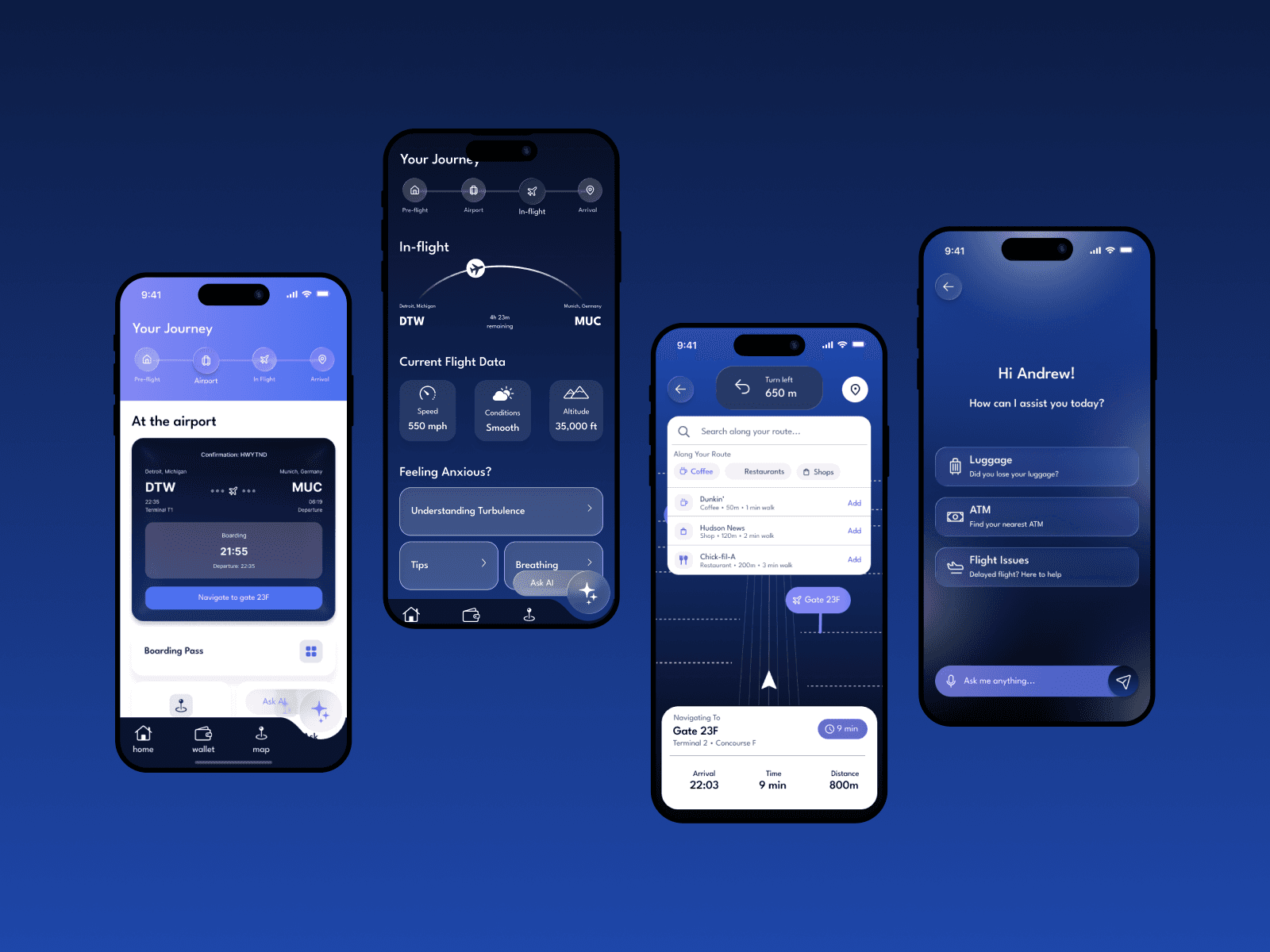
GLIDE: Designing a Calm, Predictable Travel Experience
[Project Overview]
Air travel is stressful, fragmented, and reactive. Travelers juggle 3–5 separate apps for flights, airports, navigation, and anxiety management, often learning critical information too late. GLIDE is an all-in-one travel companion that guides users through every phase of their journey with real-time foresight, navigation, and reassurance.
My focus: end-to-end journey design, in-flight anxiety support, and integrating real-time guidance into a single coherent experience.
[Problem Statement]
Travelers constantly react instead of anticipating.
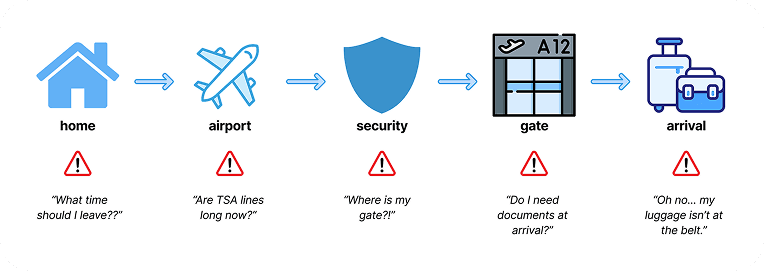
From home to arrival, users face a stream of time-sensitive questions:
What time should I leave?
Are TSA lines long right now?
Where is my gate?
Is turbulence dangerous?
These questions create anxiety, missed connections, and poor handoffs between apps.
How might we help travelers anticipate what is coming next, not just react when something goes wrong?
[Quantitative Data]
Research confirmed the need.
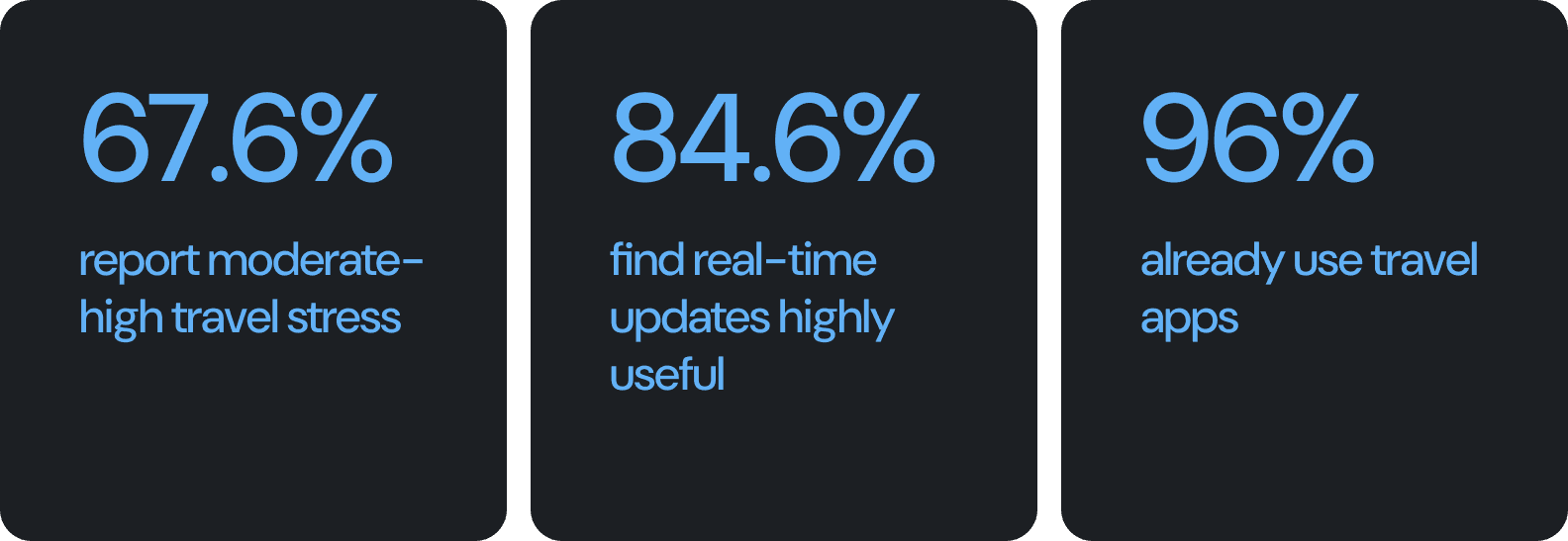
The gap wasn’t demand.
It was integration.
[Design Decision #1]
The first constraint was multi-stage coordination.
Each stage has its own timing variables, risks, and dependencies.
Leaving home late affects security timing.
Security delays affect boarding.
Gate changes affect navigation.
The system needed to model these dependencies clearly without overwhelming users.
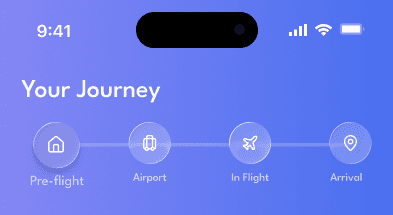
I designed a unified journey timeline that updates dynamically based on the traveler’s stage.
[Design Decision #2]
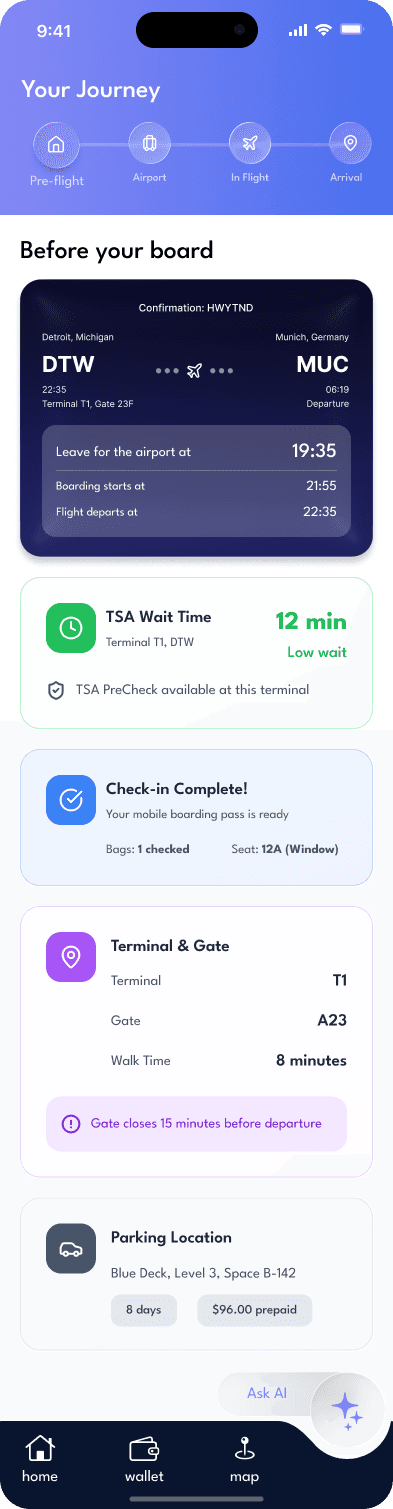
Adaptive Timing & Real-Time Updates
Timing Uncertainty → Adaptive Guidance
Managing Timing Uncertainty
Adaptive departure recommendation
Live TSA wait times
Gate walk time estimates
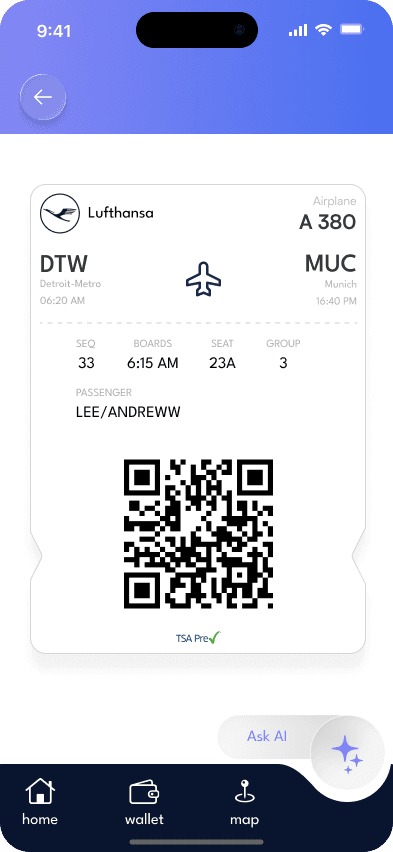
Centralized Travel Wallet (boarding pass, seat, baggage)
[Design Decision #3]
Turbulence GuidanceTiming
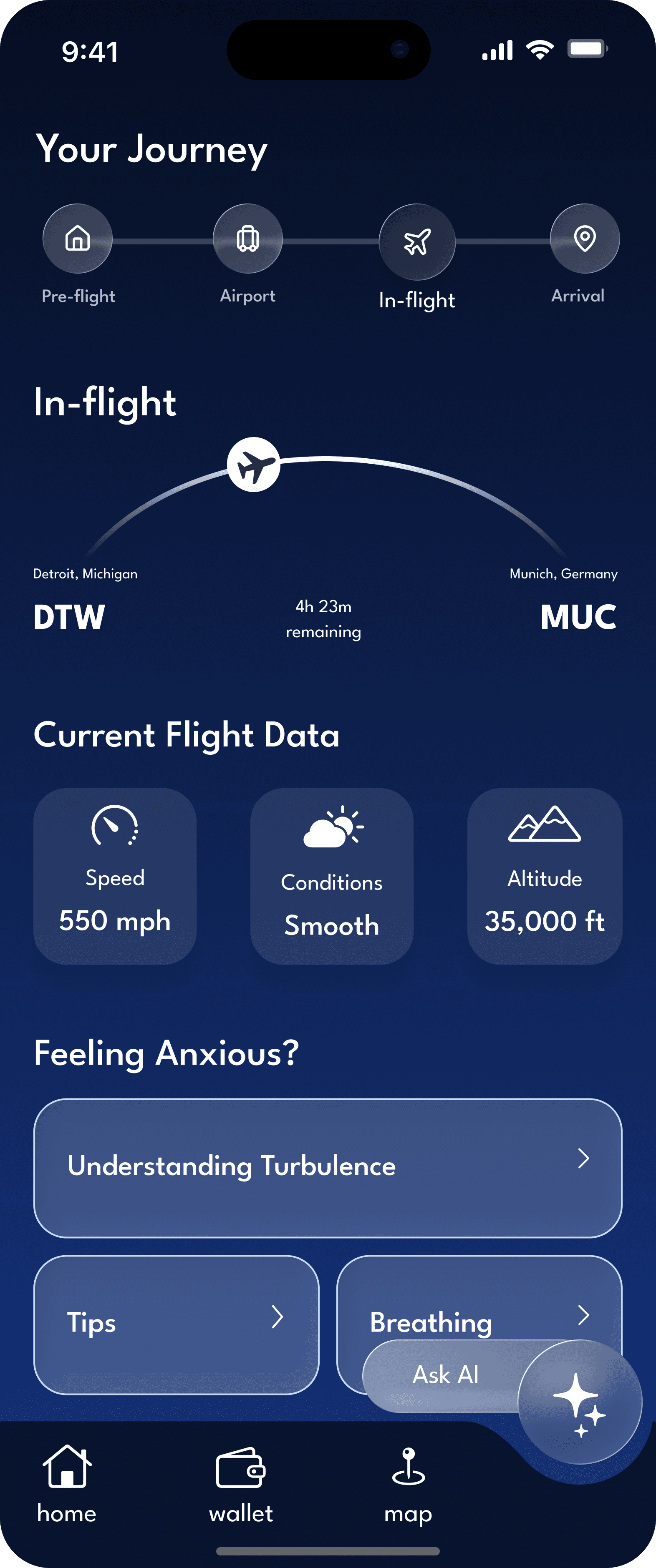
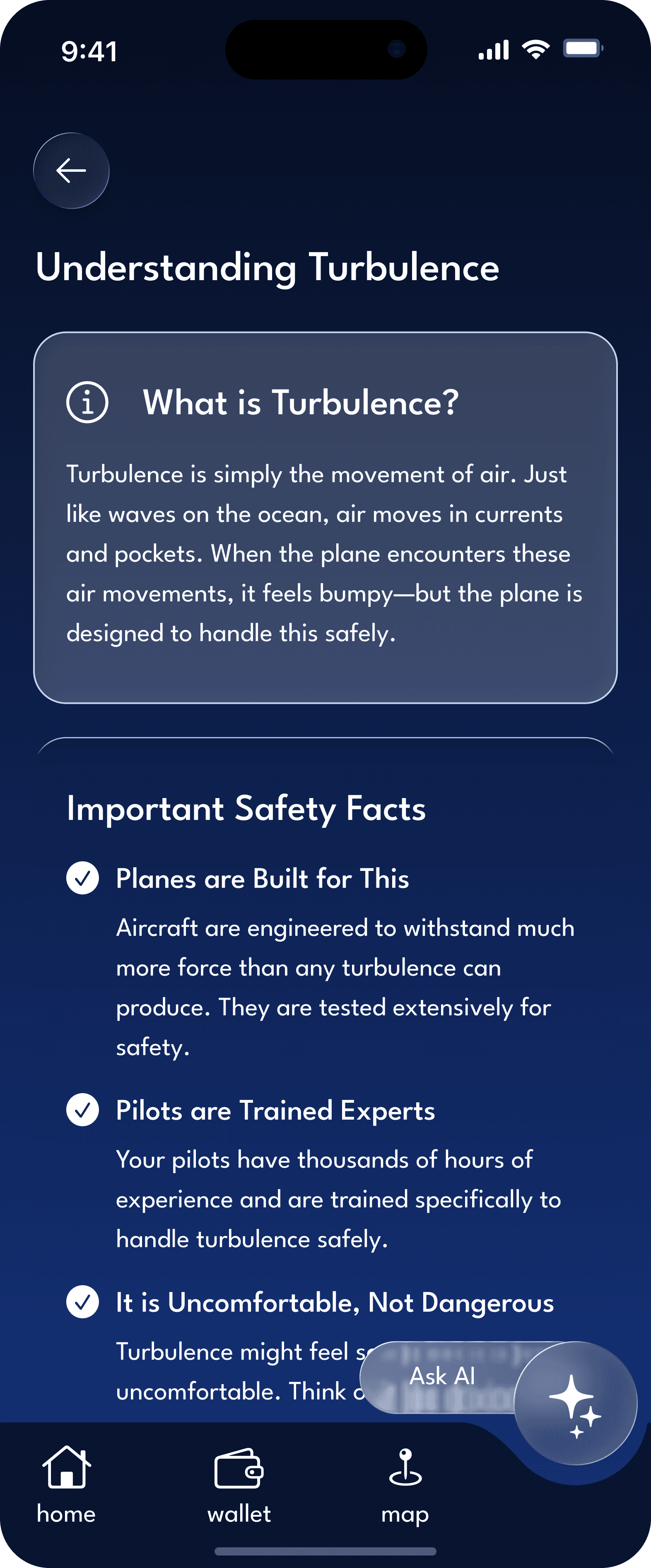
For anxious travelers, we designed an in-flight reassurance system:
Live flight conditions
Plain-language explanations of turbulence
Safety education and breathing tips
This shifted fear from the unknown to the understandable.
[Design Decision #4]
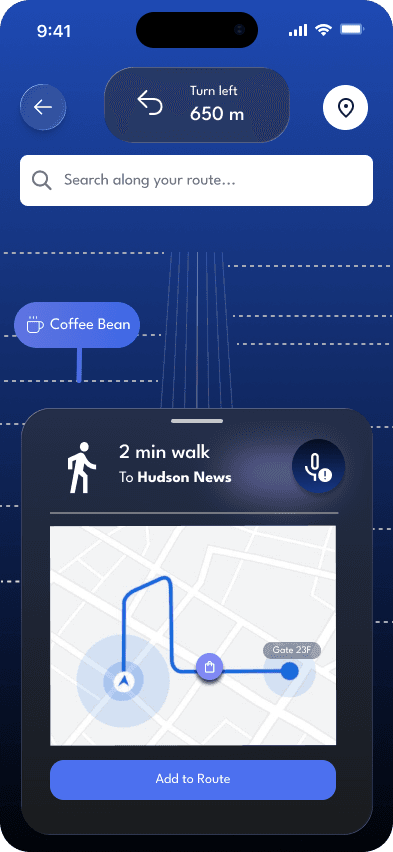
Airport NavigationFor anxious travelers, we designed an in-flight reassurance system:
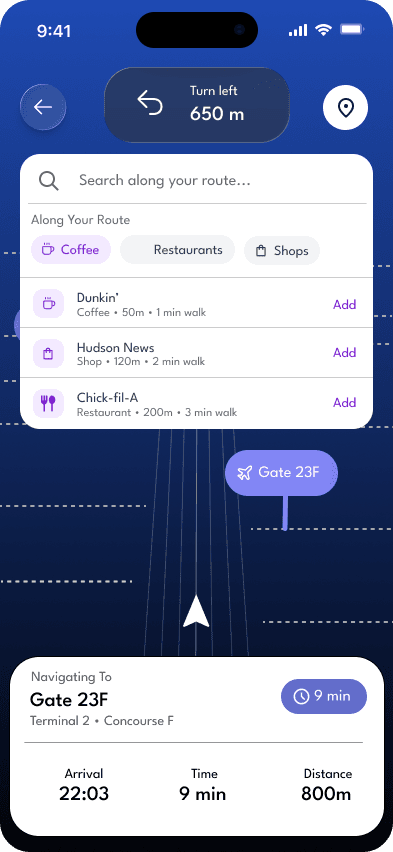
AR and map-based wayfinding
Search along your route
Time and distance estimates
Reduced missed gates and unnecessary rushing.
[Design Decision #5]
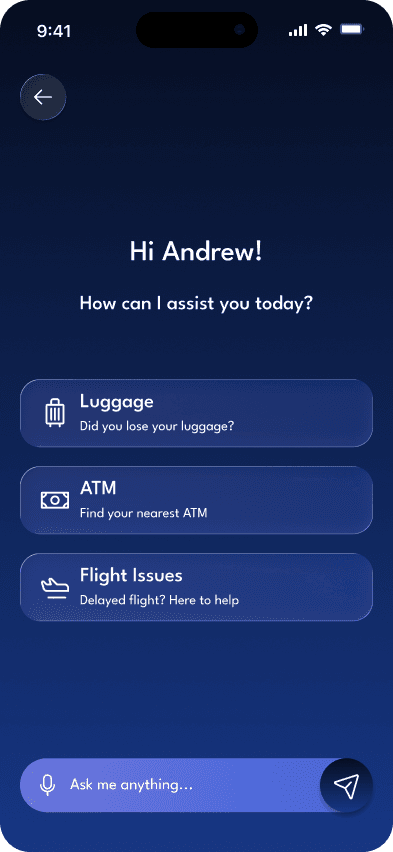
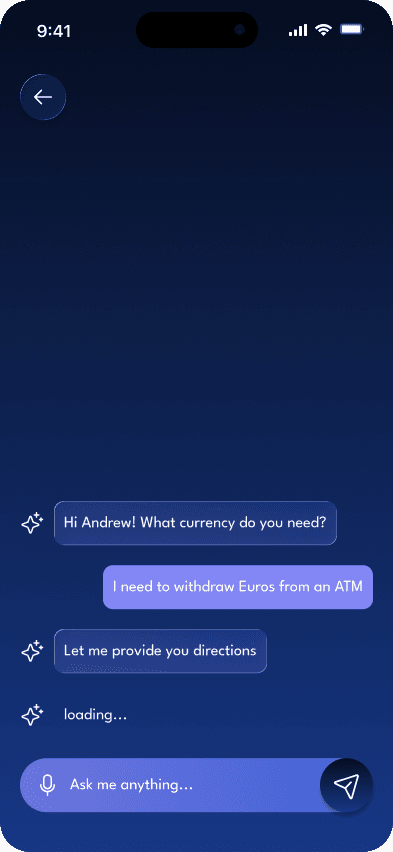
AI Assistant
Users can ask natural language questions about:
Lost luggage
Airport services
Flight issues
Credit card benefits
And anything else!
This reduced the need to switch between airline, airport, and finance apps.
[Design Decision #6]
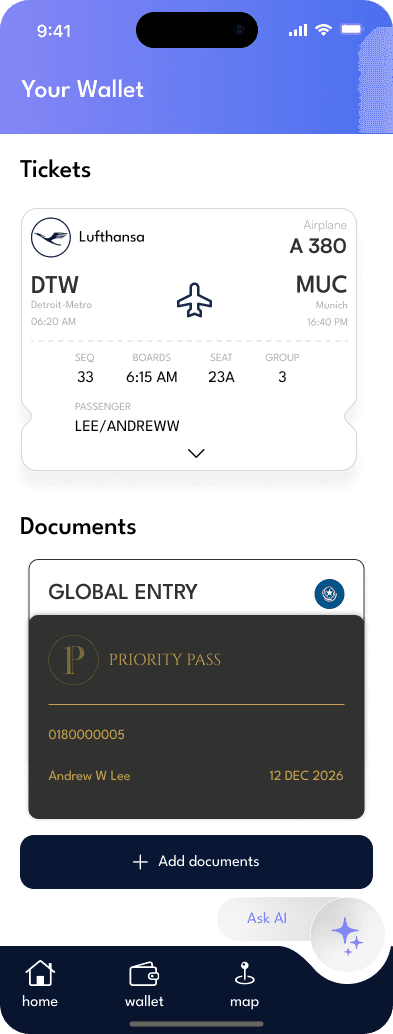
Travel Wallet
The Travel Wallet centralizes all critical travel documents and perks in one place:
Boarding passes and QR codes
Passports and visas
Credit cards and lounge access
Vouchers, upgrades, and compensation credits
Design intent: eliminate last-minute document hunting and surface hidden value at the right moment.
[DVF]
Desireability
GLIDE is desirable due to strong traveler demand for stress-free, personalized travel tools in a $1.5T market with 850M app users
Feasibility
GLIDE leverages accessible tech like APIs, AR, and AI, making it simple and scalable to build
Viability
With 4.5B global air travelers and 300M+ digital-first flyers, GLIDE taps into a huge, under-served market ready for a smarter and calmer travel experience
[Outcome & Impact]
Usability Testing
6/6 testers felt more prepared for travel
84.6% valued integrated real-time updates
Elevated journey timeline improved discoverability
Fixed Minor UI details (making AI component more clear and labeling navigational components)
Impact
Shifted travel from reactive → anticipatory
Consolidated 3–5 fragmented tools into one system
Elevated the air travel experience
Business Model
Free core experience to drive adoption (freemium model)
Premium stress-reduction & perks tools
Strategic partnerships with airlines & airports
Commission-based referrals & integrations
[High Fidelity Prototype]
67.6% report moderate to high travel stress
84.6% find real-time updates highly useful
96.2% already use multiple travel apps
Designing for emotion is as critical as designing for function
I learned that reducing anxiety required more than improving logistics. Features like turbulence guidance and step-by-step transitions showed me that emotional reassurance can be a core product value, not an afterthought.
Foresight reduces stress more than alerts
Real-time alerts alone were not enough. The biggest impact came from helping users anticipate what was coming next, which shifted the experience from reactive to proactive.
Systems thinking matters more than individual screens
Building GLIDE taught me to design across data, business models, and cross-provider integrations. The hardest and most valuable work was aligning journeys, features, and strategy into one coherent system.